Showing posts with label books. Show all posts

Saturday, January 10, 2015

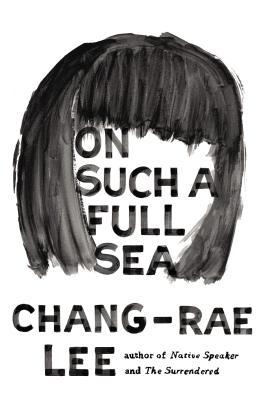
On Such a Full Sea - Chang-rae Lee

17707526

On Such a Full Sea
Written by Change-rae Lee
Hardcover, 352 pages
Published January 7th 2014 by Riverhead
ISBN 1594486107 (ISBN13: 9781594486104)
Edition language:  English
Characters:  Fan, Reg, Liwei, Oliver, Betty, Quig, Glynnis, Trish, Joseph, Loreen, Sewey, Vik, Eli, Landon, Dale, The Nicklemans

This is a strange novel expertly written.  It is a dystopian novel taking place after most of the worlds' civilizations have been wiped out due to disease and pollution.  Baltimore ("B-Mor" as it is now known) has been resettled by "New China" immigrants and society has been starkly stratified into the counties (rural poor), settlements (middle-class, highly-structured communites - B-Mor being one of them), and the Charters (the elite living in secured, gated communities).  The B-Mor community as narrator tells the story of Fan, a diver tending fish tanks who suddenly leaves after the disappearance of her boyfriend, Reg.  Although this could have easily been a highly political novel, it is primarily the story of Fan finding her way through these strata and her affect on those around her:
"What hasty preparations we make for our future.  Think of it:  it seems almost tragic, the things we're sure we ought to bring along.  We pack too heavy with what we hope we'll use, and too light of what we must.  We thus go forth misladen, ill equipped for the dawn. 
But not so our Fan.  She wasn't a prophetic one, as we know, or always ever ready, nor was she chosen, at last, to lead anyone but herself.  For at every turn, whether she bore a full satchel or one slim or nothing at all, she stood resolved, her boldness not one that simply pushed her forward but rather fixed her, solid, on the very spot she found herself.  Where you are.  Did this make her impervious?  Heroic and wise?  Not at all.  She was as subject to chance and malice as the rest of us.  She could only entertain hopes for the future.  But we know very well that there was a quality about this rootedness, which, unlike the rest of us, she never bemoaned or fought or disbelieved, that every person who met her couldn't help but recognize with a gentle trembling."  p. 301
Chang-rae Lee has given us a Greek chorus that brings us along their musings about Fan, how the community views her absence in various regards and, yes, describes some political undercurrents.  However none of this is "on the nose," and I would be hard-pressed to find a "point," or something that Lee was trying to demonstrate other than, perhaps, that everyone, no matter what class, can live a very narrow and myopic life, only needing to look up from our labors once every so often to gain perspective:

"We watch ourselves routinely brushing our teeth, or coloring the wall, or blowing off the burn from a steaming yarn of soup noodles, and for every moment there is a companion moment that elides onto it, a secret span that deepens the original's stamp.   We feel ever obliged by everyday charges and tasks.  They conscript us more and more.  We find world enough in a frame.  Until at last we take our places at the wheel, or wall, or line, having somewhere forgotten that we can look up."  p. 193
I imagine this book would be frustrating for some.  As one reviewer noted, it is more Philip Roth than Philip K. Dick.  Lee is one of those authors, however, whose writing is so well-crafted that although his story may not be full of fireworks and even drag in places, the writing pulls you along and is a joy to slow down and appreciate.  

Tuesday, June 17, 2014

The Bad Girl - Mario Vargas Llosa


The Bad Girl
Written by Mario Vargas Llosa, translated by Edith Grossman
Paperback, 276 pages
Published October 28th 2008 by Picador (first published May 30th 2006)
Original title:  Travesuras de la niña mala
ISBN 031242776X (ISBN13: 9780312427764)
Edition language:  English
Characters:  Ricardo Somocurcio, La niña mala, Paúl, Juan Barreto, Los Gravoski

I wanted to give this one star, but he's a fantastic writer. My discontent lies in that I abhor people who are door mats, fictional narrators or not. If I had to do it over again, I would have stopped when I thought I should - about 30% of the way through, and started reading "Feast of the Goat," which I hope is much better. Unfortunately, the prose and translation kept me going. I've never read "Madame Bovary," which this is a retelling. The "bad girl," the woman so filled with what some critics so ridiculously call "LIFE," (which I call manipulative narcissism), does not treat her readers by committing sweet, sweet suicide like Bovary's Emma. After the 30% mark, I told myself that anything less than a murder-suicide at the end would leave me incensed, and it has. It gets two stars and a commitment to read at least one more Llosa book; a testament to his skill. If the next book delves into this absurd sentimentality, I'll still call him a great writer, but will read no more.

Saturday, November 02, 2013

Pattern Recognition - William Gibson


Pattern Recognition (Blue Ant #1)
by William Gibson
Hardcover, 356 pages
Published February 3rd 2003 by Putnam Adult (first published 2003)
ISBN 0399149864 (ISBN13: 9780399149863)
Edition language:  English
Series:  Blue Ant #1
Characters:  Hubertus Bigend

Literary Awards:  Locus Award Nominee for Best Science Fiction Novel (2004), Arthur C. Clarke Award Nominee (2004), British Science Fiction Association Award Nominee for Best Novel (2004)

Pattern Recognition's major theme considers humans' tendency to see order out of chaos, patterns when there are none.  Other themes include branding, marketing, and consumerism, among others.  The multiple themes that require abstractions on top of abstractions left me cold and not invested.   I am empathetic to the dangers of consumerism, branding, and the post-modern marketing conceit wherein you are designated as "cool" and being a rebel for using a certain product.  Of course, if you use that product, you are possibly succumbing to the marketing and not cool or a rebel.  David Foster Wallace discussed this in his essay "E Unibus Pluram:  Television and U.S. Fiction."  DFW cites the (now almost forgotten) Sprite campaign "Image is Nothing!  Thirst is Everything!"  From the essay:  "Above all, of course, the audience is not supposed to recognize the absurdity of products being billed as distinguishing individuals from crowds in order to sell to huge crowds."  I am also simpatico with the main theme that our advanced primate evolution doesn't get us beyond seeing Mother Mary on the surface of a squash.  That's a crude way to put it - in other words, humans want order and organization in their lives and sometimes events, people, etc., simply can't be ascribed order and that's a source of anxiety.  We then find order out of randomness to help dispel this anxiety.

It's a coincidence (is it?  Or is Gibson reading my mind?!  Ahem.) that just today Gibson tweeted an article from Psychology Today about apophenia - the tendency of humans to see patterns in randomness.  After reading this, I probably shouldn't wax flippant about our advanced primate evolution - it's far better (from an evolutionary standpoint) to find patterns when there are none vs. not finding a pattern when there IS one.

Despite my affinity for these themes, I simply don't think Gibson's combination and explication of them makes a good story.  All of the underlying themes are quite interesting, but I learn more from the non-fiction material concerning these concepts and therefore find the non-fiction material also more engaging.

His prose is always very good, but I also must admit that it felt too... precious(?) at times - "The spent match makes a tiny ceramic sound when he drops it into the ashtray. "

Perhaps the book is too smart for me and I just don't "get" it.  In any event, moving on, and debating whether or not I want to read the other books in the "Blue Ant" or "Bigend" series.


Saturday, August 31, 2013

The River Swimmer - Jim Harrison

This book contains two novellas - one concerning an aging art professor and the other explores a gifted, young swimmer whose wisdom belies his years.

Harrison seems to use his characters as proxies of himself lately and these two novellas are no different - lustful outdoors-men who enjoy their whiskey, wine and food. At first I was scared that this his writing was beginning to become a parody of itself, but even if these tropes show up often, his insights and prose lay the parody notion to rest. Mr. Harrison, please keep writing about struggles of the heart, the mysteries of life and if whiskey, women and French cheeses seem to often appear in the mix, so be it. What a ridiculous complaint, eh?

Saturday, August 17, 2013

No Country for Old Men - Cormac McCarthy

Although the "Aw shucks, this country is going to hell" theme got on my nerves by the end, McCarthy's prose is amazing:

"The raw rock mountains shadowed in the late sun and to the east the shimmering abscissa of the desert plains under a sky where raincurtains hung dark as soot all along the quadrant."1

It took me a couple of rereads and a dictionary to parse that sentence. It's impressive.

The plot shouldn't be examined too closely - let the prose and a villain for the ages pull you through this.

1Mccarthy, Cormac (2007-11-29). No Country for Old Men (Vintage International) (Kindle Locations 517-518). Knopf Doubleday Publishing Group. Kindle Edition.

Reamde - Neal Stephenson

There must have been SOMETHING for me to finish a 1000+ page book, but this was exposition upon exposition. I cannot think of anything more boring than reading hundreds of pages concerning the economy of a FICTITIOUS MMORPG.
I'm an action nut, so I kept going, but shame on me.

Saturday, July 20, 2013

The Flamethrowers - Rachel Kushner

Chapter 3, in its entirety, is a study in beautiful language. I dug the motorcycle parts. I didn't dig the art parts. I dig her obvious love of language. I didn't dig her obvious overuse of language.

This is another "flawed genius" book. It's worth the pretense and, let's be honest, I think it's impossible for any artist not to be ostentatious as part of the process of creation. Two of William Blake's proverbs of hell come to mind: "You never know what is enough unless you know what is more than enough, " and "Prudence is a rich ugly old maid courted by Incapacity."

Albeit the pretentiousness, Kushner is a tremendous talent whom I hope can replicate what amount of language is "just enough" more often.

Monday, June 17, 2013

The Steel Remains - Richard K. Morgan

Richard K. Morgan wrote, possibly, my favorite sci-fi novel, "Altered Carbon." This is his first fantasy novel. Morgan has ignored many fantasy conventions with "The Steel Remains." There is a gay protagonist, aliens, and gay sex between the protagonist and the alien. The sex is told with the usual Morgan detail, that is, the sex sections are basically pornography. It's a very brave route and I applaud Morgan for the bravery, but it also seemed ridiculous - more on this shortly.

It has the other Morgan touches as well - excellent descriptions, prose, structure, and a taste for the ultra-violent.

There's a mind-bending time-space continuum portion that's a little over-the-top and goofy, but Morgan again uses a deft writing hand to navigate his readers through it.

Ultimately, my final take is that this is, in many ways, an amazing book, but, yet, I simply didn't enjoy reading it that much. Ringil (the gay protagonist) is something of an ass and you could argue that it's because he's had to be. All the characters seemed a little thin and I can't completely get past the notion that he's breaking the rules of fantasy for the sake of breaking the rules. The homosexual/alien dynamic strikes me as goofy even though Morgan executes it well, but only in retrospect. Upon the initial reading, it was a you-have-to-be-shitting-me moment. It's difficult to discuss the homosexual component - it certainly strikes me as odd, gratuitous and, at first, seemed to detract from the story and seem somewhat implausible. However, in retrospect, it's a better book than my initial impression. Morgan provides answers and motives. I just wish that Morgan would have written a novel that brings in its readers as well as Ringil crosses swords.

Monday, June 03, 2013

A Visit from the Goon Squad - Jennifer Egan

I'm already conflicted by this book, so I'm taking the lazy way out and merely listing my reactions as I posted them on Goodreads:

"This seems too clever for its own good. I kind of hate it so far. I'm sticking with it, but find the encapsulation of a subject's life in a single paragraph annoying. Is this just one stream of consciousness intertwining characters together in what amounts to short stories? Fine, if it resonates." 05/28 page 85

"And just that quickly... I've been horn-swaggled into thinking this might be without merit. The "X's and O's" chapter - a (the?) Scotty chapter - is amazing. Jonathan Franzen said (or wrote - don't have the original source) that a writer should write in the third person unless a distinctive first-person voice offers itself. I hoped that these short stories intertwined would resonate and Scotty's first-person narration of meeting an old friend, his isolation, etc., certainly has resonated with me."

This is a deeply-flawed work of genius. I rank Egan in a club with Paul Thomas Anderson, David Foster Wallace, and Lev Grossman (to name a few).

In all of these, my admittedly amateur critique sees brilliance in prose indelibly marred by something else- too clever technique (Wallace, Egan), overlong (Anderson) or derivative (Grossman).

All of these artists have equally indelible gifts, all of them having the prose and insight to quickly establish a human condition.

I'm so confused I don't know whether to rate this a 1 star or 5 star. So, 3.

Friday, May 24, 2013

Every Love Story Is a Ghost Story: A Life of David Foster Wallace - D.T. Max

D.T. Max has written a level-headed biography of DFW. The navel-gazing into the theory and meaning of DFW's works vis-à-vis his mental state strikes me as pretentious. However, I admit to being something of a simpleton when it comes to literary theory. It's probably just over my head.

Taken as a whole, Max's writing is compelling and highlights include snippets of DFW's correspondence with Don DeLillo and Jonathan Franzen.

Max's neutral approach and mostly straightforward writing failed him at probably the most crucial part - the end. In fact, the last paragraph and last sentence specifically, pisses me off:

"The story of 'David Wallace' was now first. In his final hours, he had tidied up the manuscript so that his wife could find it. Below it, around it, inside his two computers, on old floppy disks in his drawers were hundreds of other pages— drafts, character sketches, notes to himself, fragments that had evaded his attempt to integrate them into the novel over the past decade. This was his effort to show the world what it was to be 'a fucking human being.' He had never completed it to his satisfaction. This was not an ending anyone would have wanted for him, but it was the one he had chosen."

For fuck's sake, man. You couldn't pass on that last sentence when it popped in your head? The sentiment is fine, but you couldn't pass on that little trick of a phrase after spending a significant amount of time discussing Wallace's wish for genuine, "single-entendre" writing?

Read this, anyhow.

Monday, May 20, 2013

I Married a Communist - Phlip Roth

This is the first book I've read penned by Philip Roth, and my expectations were off-kilter. I see his genius with the pen, but man, oh, man this book was a slog to get through. In my eyes, this book is summed up well in a couple of brilliant paragraphs:

"There was one song she (ed. Lorraine, Murray's daughter) especially loved. It was beautiful, too, a stirring, mournful, hymnlike folksong called 'Dubinushka,' a simple song sung with a balalaika in the background. The words to 'Dubinushka' were printed in English on the inside of the album cover, and she learned them by heart and went around the house singing them for months.

Many songs I have heard in my native land - Songs of joy and sorrow But one of them was deeply engraved in my memory: It's the song of the common worker.

That was the solo part. But what she liked best to sing was the choral refrain. Because it had 'heave-ho' in it.

Ekh, lift up the cudgel, Heave-ho! Pull harder together, Heave-ho!"

… In the dark we listened, though now neither I to him nor her to me but both of us to "Dubinushka." It was just as Murray had described it: beautiful, a stirring, mournful, hymnlike folksong. Except for the crackle off the worn surface of the old record - a cyclical sound not unlike some familiar, nocturnal night noise of the summer countryside - the song seemed to be traveling to us from a remote historical past. It wasn't at all like lying on my deck listening to the radio to the Saturday night concerts live from Tanglewood. "Heave-ho! Heave-ho!" was out of a distant place and time, a spectral residue of those rapturous revolutionary days when everyone craving for change programmatically, naively - madly, unforgivably - underestimates how mankind mangles its noblest ideas and turns them into tragic farce. Heave-ho! Heave-ho! As though human wiliness, weakness, stupidity, and corruption didn't stand a chance against the collective, against the might of the people pulling together to renew their lives and abolish injustice. Heave-ho.

I didn't appreciate 320 pages of two characters talking about a third character. Mamet once wrote in a memo to screenwriters that "ANY TIME TWO CHARACTERS ARE TALKING ABOUT A THIRD, THE SCENE IS A CROCK OF SHIT." To be fair, Mamet was referring to TV drama, and not a novel, but this ENTIRE NOVEL IS TWO CHARACTERS TALKING ABOUT A THIRD, and it caused the same boredom in me that Mamet warns about.

Thursday, July 26, 2012

Norwood - Charles Portis

I was anxious to read Portis after seeing "True Grit" (still need to read it), and reading about his facility with Southern dialogue.

That being said, coming off the heels of the breakneck pace of "Leviathan Wakes" and my consequent breakneck reading pace, I read this book too fast and missed (some of) the devil in the details, Portis's dialog and prose.

I didn't miss it all and it made for a nice weekend read.

"I wish Sammy Ortega was here," said Miss Phillips. "He'd break your arm."

"I'd like to see him try it," said Norwood.

"I was talking to Fring, I wasn't talking to you," she said. "But he'd get you too if he felt like it, you bigmouth country son of a bitch. He'd kick your ass into the middle of next week."

"I'd like to see him try it."

"You just got through saying that. Don't keep saying the same thing over and over again. Don't you have good sense?"

"You said you was talking to him the first time."

"You peckerwood."

Leviathan Wakes - James S.A. Corey

Even though this is a hefty tome at over 600 pages, "Leviathan Wakes" non-stop action makes the reading easy. This "kick-ass space opera" as George R.R. Martin's blurb refers to it is, indeed, a kick-ass space opera. Penned by James S.A. Corey, it is a rollicking good time with noir and horror elements thrown in. James S.A. Corey is the pen name for the collaboration of the authors Daniel Abraham and Ty Franck.

On my Goodreads review, I deliberately didn't talk about it much, but for my own edification and record-keeping, I'd like to put my thoughts down here. If you're going to read it, I'd suggest you stop reading now as the book is best enjoyed with no prior conceptions.

The book is well-paced throughout, but the second half of the book contained elements that rang a little false to me, especially the notion of using the Mormons' generation ship to push the infected space station into the sun.

An additional question I ponder is if this would have been a better book if the stakes hadn't been the highest (survival of humanity)? I understand that these stakes are a trope of the space opera sub-genre, but I wonder if a better book would have been written had the stakes been dialed down somewhat to allow less desperate measures to be used for resolution? Those desperate measures took me out of the story somewhat. Drama exists in many forms and levels - the very survival of humanity doesn't have to be at stake to create it.

My criticisms are minor and almost seem disingenuous given how much fun this tale gives to the reader. I look forward to reading the second of three in the series, "Caliban's War."

Wednesday, June 13, 2012

The Sisters Brothers, - Patrick deWitt

"... 'Now you dance, chink!' With these words, the boy began dancing wildly and without grace, looking much like someone forced to stand barefoot over hot coals. It was an ugly thing to witness, and if I had not before made my decision about Mayfield, the matter was now settled in my mind." - Eli Sisters
After reading and greatly enjoying this book, it's finally come to me that I’m a fan of the Western. It surprises me, although I’m doing some head-smacking at my lateness in the realization. Westerns, whether in book or film form, bored me when I was younger. I think the drab landscape, lack of technology and overused tropes kept me away. What I think has brought me back is the prose in both Portis’ book “True Grit” and the recently remade film, as well as the excellent HBO series “Deadwood.” I have a fondness for this style of prose - characterized by formal use of language, sometimes punctuated by expletives and employing minimal use of contractions. DeWitt continues this style to magnificent effect.

This is a tale of Eli and Charlie Sisters: two brothers who are killers for hire. They encounter many characters and events on their journey. This might be called an anti-Western for its satirical moments, somewhat rambling plot and overall bleak outlook on civilization. The plot is secondary in my view, although it isn’t horrible. The joy of reading this book is the musings of the narrator, Eli Sisters as well as other characters in the book.

I’ve collected a few that follow.

Regarding gold-rush era San Francisco:

"’You must understand, gentlemen, that the tradition of thrift and sensible spending has all but vanished here. For example, when I arrived last time from working my claim I had a sizeable sack of gold dust, and though I knew it was lunacy I decided to sit down and have a large dinner in the most expensive restaurant I could find... and for this repast, which would have put me back perhaps half a dollar in my hometown, I paid the sum of thirty dollars in cash’

Charlie was disgusted. ‘Only a moron would pay that.’

‘I agree,’ said the man. ‘One hundred percent I agree. And I am happy to welcome you to a town peopled in morons exclusively. I hope that your transformation to moron is not an unpleasant experience.’”


“‘Yesterday I saw a man leap from the roof of the Orient Hotel, laughing all the way to the ground, upon which he fairly exploded. He was drunk, they say, but I had seen him sober shortly before this. There is a feeling here, which if it gets you, will envenom your very center. It is a madness of possibilities. That leaping man’s final act was the embodiment of the collective mind of San Francisco. I understand it completely. I had a strong desire to applaud, if you want to know the truth.’”

This is the most I’ve enjoyed a book in a long time. A blurb refers to it as “cowboy noir,” which is apt. It is much-appreciated storytelling enlivened by simple, straightforward, writing craft.

Body count:

16 men shot
2 men poisoned
1 man drowned
1 man suicide by axe
2 bears
4 horses
1 dog
9 beavers

Sunday, June 03, 2012

The Peculiar Memories Of Thomas Penman - Bruce Robinson

This was a tough decision to either forge ahead and finish or abandon it (which is what I did).

Part of my hesitancy to finish was Robinson's style (it's not unfair to label it a little obtuse), fascination with the mundane details and, well, frankly, not understanding the British place names, etc (shame on me for letting that be a factor).

I put this on my "to reread" shelf because after I turned the book back into the library, I am still thinking about it and maybe regretting not pushing through. It certainly has some charm, isn't horribly long and I'm experiencing some regret.

On the other hand, there are way too many books out there and life is short.

If you're reading this in an attempt to decide whether or not to read it, please, give it a shot. I'm very much on the fence and didn't give it a full read.

Tuesday, May 22, 2012

The Name of the Wind - Patrick Rothfuss

Out of the last four fantasy/sci-fi books I've started to read, this is the only one I finished. I wished I wouldn't have. Hints of a great fantasy story at the beginning, followed by superkid / playboy going through teenage angst at a... wait for it... magic school.

I enjoyed reading it, but that enjoyment was due to being felt led on by a promise (correctly or incorrectly perceived) that didn't happen. What was that promise? THAT SOMETHING WAS GOING TO HAPPEN AFTER MAGIC SCHOOL.

"That gets told in the next book(s)." Really? I try to be positive. I do. I read all the glowing reviews for this book and ended up REALLY not liking it. So, maybe it gets better in the next? Let's look at the reviews with a more guarded eye this time. I came across this HILARIOUS review of the next book by "Jacob"

"THE GODDAMN FELURIAN BIT."

Click the link. Read about the Felurian bit.

Fool me once - shame on you...

There's an old Zen koan that says "If you meet the Buddha on the road, kill him." It's entirely metaphorical and basically means if you think you've attained enlightenment, think again.

If you see J.K. Rowling on the road, kill her.

Monday, September 26, 2011

The History of Western Philosophy - Jewish Religious Development

Some interesting notes on early Judaism:

“The early history of the Israelites cannot be confirmed from any source outside the Old Testament, and it is impossible to know at what point it ceased to be purely legendary. David and Solomon may be accepted as kings who probably had a real existence, but at the earliest point at which we come to something certainly historical there are already the two kingdoms of Israel and Judah.” p. 309

In 596 B.C., Nebuchadnezzar captured Jerusalem, destroying the Temple and removed a large part of the Jewish population to Babylon. Babylon fell in 538 B.C., and the new king Cyrus, king of the Medes and Persians, allowed the Jews to return to Palestine under the leadership of Nehemiah and Ezra. The “temple was rebuilt, and Jewish orthodoxy began to be crystallized.” p. 310

It is during this time that Jewish thought underwent an important change. The first commandment stating “Thou shalt have no other gods but me” is a new belief preceding this time of captivity. This is the first indication that worship of other gods was sinful. This, in turn, was used to explain why the Jews were being persecuted - for their worship of heathen gods. After the return from Babylon, Ezra and Nehemiah forbid and dissolved mixed marriages in Jerusalem.

“After Ezra and Nehemiah, the Jews disappear awhile from history. The Jewish state survived as a theocracy, but its territory was very small - only the region of ten to fifteen miles around Jerusalem.” p. 313

It is surprising to me to me that this 10 to 15 mile ring around Jerusalem continued the Judaic religion until 175 B.C. when the Seleucid king Antiochus IV attempted to Hellenize the Jewish population. This was vehemently opposed by the mostly rural Hasidm, who prompted the Jews to rebel when Antiochus became involved in a war with Egypt. Apparently Antiochus decided to destroy the Jewish religion by outlawing circumcision and the practice of abstaining from pork. The urban Jews apparently submitted, but the rural Jews resisted. This period is known as the First Book of Maccabees. This period of persecution reinforced Jews’ belief that salvation lies in the hereafter. Also, “in enduring and resisting persecution the Jews of this time showed immense heroism, although in defence of things that do not strike us as important, such as circumcision and the eating of pork.” p. 316.

“The time of the persecution by Antiochus IV was crucial in Jewish history. The Jews of the Dispersion were, at this time, becoming more and more hellenized; the Jews of Judea were few; and even among them the rich and powerful were inclined to acquiesce in Greek innovations. But for the heroic resistance of the Hasidim, the Jewish religion might easily have died out. If this had happened, neither Christianity nor Islam could have existed in anything like the form they actually took.” p. 316

Saturday, September 10, 2011

The Polish Officer

This is a work of historical fiction - a spy tale set in various locales during the start of WWII. Furst's attention to detail and research is admirable. However, I felt this read more like a TV series - episodic, with none of the episodes building on the other, except, perhaps, in the incrementally positive worldview of the protagonist, Alexander de Milja. Also, I hate to nitpick on style, but I'm really starting to get annoyed with excessive use of sentence fragments by many writers, not just Furst.

The first chapter is brilliant, and Furst's writing vividly evokes war-torn Europe during WW II. Given that there seems to be only slight character development in de Milja and since all of the other characters are basically set pieces, I would have hoped for a tighter-knit story. Unfortunately, all we have are episodes of various missions that de Milja undertakes. I'll give Furst the benefit of the doubt that this was used to illustrate how lost and futile even one man's heroic exploits are in the larger context of war, but the futility of an individual during wartime is already a well-visited subject.

Tuesday, September 06, 2011

The Boxer Rebellion - Diana Preston

After reading Diana Preston's "The Boxer Rebellion," I've learned something about my taste in history books. Full-length books on relatively brief historical events tend to be filled with anecdotes. I do not enjoy reading a book full of anecdotes. A encyclopedia entry will suffice.

This is a book admittedly telling only the Western side of the story. Preston claims that Chinese historical accounts are rare. A quick google search shows a few, so I'm dubious of this claim. Suffice it to speculate that a superstitious Chinese Empress believed that the xenophobic and violent "Boxer" sect actually possessed the mystical powers they claimed and were going to be able to throw out the racist and imperialist foreigners. What isn't speculation is that the rebellion failed, causing a summer of misery and fear in 1900.

For a more detailed account, here is the wikipedia article. If you think you might enjoy reading 360+ pages of anecdotes about turn-of-the century Westerners' plight during these times, you could read this book.

Thursday, August 25, 2011

Let the Right One In (the novel) - John Ajvide Lindqvist

After seeing both the Swedish and American film adaptations of this novel, and liking both, I was excited to read the novel. The books are always better, right? Not in this case.

Oh my. Where to begin? As well as being an original, creative vampire tale, I think Lindqvist was trying to make a larger statement about the moral decay of society. Pedophilia, alcoholism, and excrement all play a much too large role in this novel. Raskolnikov from Dostoevsky's "Crime and Punishment" is mentioned a few times, alluding to this societal decay theme. If Lindqvist was attempting a modern, vampirish take on "Crime and Punishment," he failed. There are way too many points-of-view (including a squirrel, at one point), truly gratuitous descriptions of pedophilia, and the entire book leaves you wanting to take a shower.

Kudos to both films for getting the great nugget out of this book and leaving the rest behind. Gross. Stick with either film (I prefer "Let Me In."). I now understand why the person who lent me this book didn't care if he ever got it back.